
Disclosure: We are reader-supported. If you buy through links on our site, we may earn a commission. Learn more.
Gold and silver have turned into regular headline news in a way we have not seen in years. In the latest episode of The Crest Report, host Jeremy Herrell and GoldenCrest Metals CEO Rich Jacoby walk through what is driving the metals narrative in 2026, why volatility has not broken the uptrend, and what retirement savers should watch next.
The show originally aired on Jeremy Herrell’s Live From America (LFA TV), but is also available on YouTube for replay.
Watch the full episode:
Below is a quick recap for readers who prefer to skim the highlights instead of watching the full hour long discussion between Jeremy and Rich.
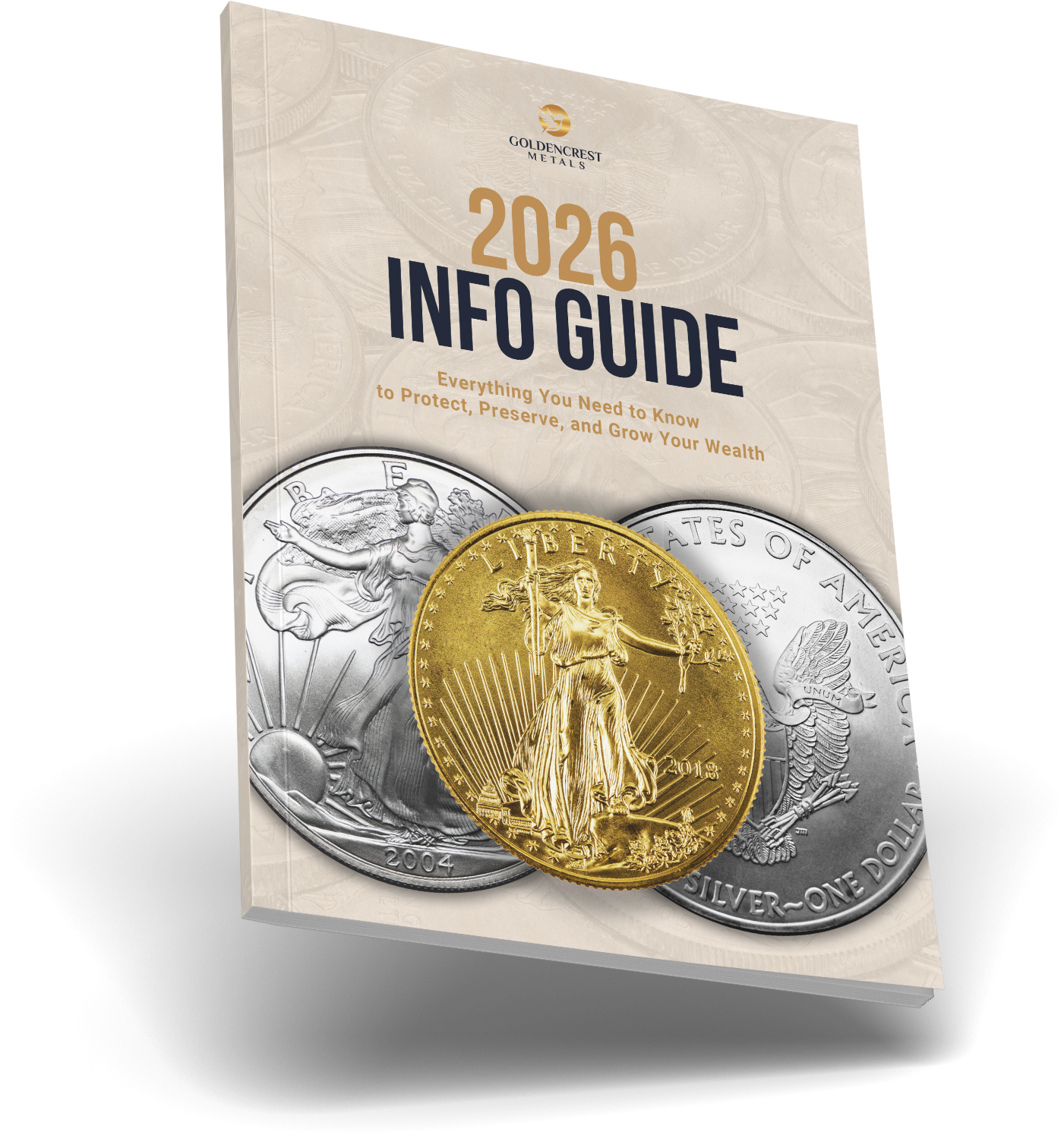

Claim Your Free Guide Today
Free Guide Reveals How to Protect Your Retirement Savings with Physical Gold and Silver.
Gold and silver are up, even with volatility
Jeremy opens by framing the last 16 to 18 months as a period where precious metals coverage has “been getting out of the financial world” and into mainstream headlines, which usually means more everyday buyers are paying attention.
They highlight that, despite sharp moves, gold and silver are still showing strong year-to-date gains in early 2026. Their point is simple: even with pullbacks, metals have continued to hold positive momentum.
Why this matters: volatility is normal, but the broader trend is what long-term buyers care about. The episode repeatedly returns to the idea that short-term dips do not automatically invalidate the bigger move.
“Bad actor” metals companies are real, and due diligence matters
A major section of the show focuses on the reality that some precious metals companies have overpromised and underdelivered, leaving consumers with a “bad taste” and a lot of justified hesitation.
Rich shares stories of older buyers discovering that metals they believed were purchased were allegedly never purchased at all, followed by the most alarming detail: difficulty reaching the company afterward.
Jeremy asks two practical questions:
How does someone hold a company accountable?
How do they avoid the same outcome the next time?
Rich’s core advice is to research the company across multiple review platforms and “drill down” into the reviews, not just the star rating. He specifically mentions looking at Google reviews, Trustpilot, and the Better Business Bureau, then reading patterns in complaints (non-delivery, no call backs, legal claims, etc.).
Practical checklist from this segment
Do not buy just because you saw an ad.
Look up the company on multiple review sites.
Read the negative reviews carefully and look for repeated themes.
Be wary of review patterns that look unnatural, such as sudden bursts of overly positive reviews right after a negative one.
Related: Gold vs Stocks During Financial Crises - What the Data Shows
The U.S. debt problem is not politics. It is math.
Jeremy puts the national debt front and center, citing:
U.S. debt above $38 trillion
$2.6 billion per day in interest payments
Rich frames the issue as structural: more borrowing leads to higher interest costs, which leads to more borrowing. In his view, markets can tolerate large debt, but they struggle with accelerating debt. That creates pressure that is not about a single headline or a single week in the markets.
Their core point: precious metals benefit in environments where confidence in paper systems weakens and where currency purchasing power is pressured over time.
Visit Rich Jacoby's website to claim your free precious metals guide.
China, Treasuries, and why “demand support” matters

Jeremy Herrell and Rich Jacoby on LFA TV
They discuss headlines about China potentially asking banks to scale back U.S. debt exposure. Rich emphasizes a key distinction: it may not be framed as retaliation, but as risk management.
His argument is that even if there is not a dramatic selloff, a shift from “automatic” buying to “selective” buying matters. When a major buyer stops expanding exposure, demand support weakens, and the bond market can behave differently.
They also talk about how markets can react to statements and rumors even without immediate proof, especially when the statement comes from someone in power. The takeaway is not “believe everything,” but “understand how fast sentiment can move markets.”
Claim Your Free Guide Today
Free Guide Reveals How to Protect Your Retirement Savings with Physical Gold and Silver.
Bonds and the “hidden support” that may be fading
Rich Jacoby explains the bond angle in portfolio terms:
For years, when stocks rallied, large institutions often rebalanced by buying bonds. Those mechanical flows helped absorb heavy issuance. If stocks stall or weaken, those rebalancing flows can slow, and bonds may not play the same stabilizing role people expect.
In plain English: if bonds stop cushioning portfolios the way they used to, investors may feel more volatility in places they assumed were “safe and steady.”
Silver supply, industrial demand, and why the long-term story is not just fear
A section of the episode touches on silver as a strategic metal, not just a “store of value” argument. They discuss the idea that silver is heavily tied to industrial demand, including trends like solar and electrification.
The key theme: silver is not only a monetary metal. It is also a utility metal. As demand grows and supply is constrained, price pressure can build even if headlines cool off temporarily.
Big forecasts: why they keep coming up
Jeremy and Rich reference aggressive forecasts from major institutions for gold and silver, and they discuss the idea of central banks continuing to buy gold in size.
Whether a reader agrees with any specific price target or not, the meta-point is important: when large institutions keep publishing bullish metals outlooks, it is usually because they see structural conditions supporting the trend, not because of a single news cycle.
Visit GoldenCrestMetals.com to learn more.
Financial advisors, incentives, and a smarter way to ask the question
This is one of the most practical segments of the episode.
Jeremy notes that they have discussed how financial advisors may “turn their head” toward gold and silver as the trend continues. Rich is blunt about why he believes many advisors resist the conversation: incentives and product access.
His recommendation is not to argue emotionally. It is to bring data.
A strong, simple approach Rich suggests:
- Pull your statement and calculate your percentage return over the last year.
- Compare that to gold and silver performance over the same period.
- Ask your advisor: based on the numbers, what am I missing?
Rich also emphasizes diversification. The discussion is not “put everything into metals.” The message is: consider precious metals as one component of a diversified strategy.
Final takeaway: do research, ask questions, and get a second opinion
The closing message is consistent with the rest of the show:
- Do your due diligence.
- Avoid choosing a metals company based on ads alone.
- Understand volatility and think long-term.
- If you are curious, start with a conversation and education.
Free consultation and next steps
If you want to learn more, request your free 2026 Info Guide directly from GoldenCrest Metals' website.
