
Disclosure: We are reader-supported. If you buy through links on our site, we may earn a commission. Learn more.
Devlyn Steele, director of education at Augusta Precious Metals, recently joined IncomeInsider TV to discuss why so many Americans nearing retirement feel increasingly uneasy about the future.
The conversation focused on a concern many savers already feel in their daily lives: even if markets recover and account balances look stable on paper, the real question is whether those dollars will still deliver the retirement lifestyle people expected. Steele’s answer was blunt.
In his view, inflation, reckless government spending, and long-term pressure on the dollar are making retirement planning far more fragile than many Americans realize.
The IncomeInsider TV podcast episode is available on YouTube, Spotify, Amazon, and Apple Podcasts.
Watch the full YouTube interview here:


Protect Your Savings with Physical Gold and Silver
Claim Your Free "Ultimate" Gold IRA Guide Today.
For readers who prefer to skim rather than watch the full episode, here are the major takeaways.
Retirement anxiety is not just in people’s heads
One of Steele’s strongest points was that retirement security is about much more than a portfolio balance. It is about whether that money will continue to buy the things retirees actually need: housing, healthcare, travel, family support, and day-to-day living expenses.
He noted that many Americans fear outliving their money, and argued that this concern is not irrational. In today’s environment, people are watching inflation, market volatility, and rising costs chip away at confidence in the future.
He also argued that this moment feels different from a routine rough patch. In the interview, Steele described the current economy as increasingly “K-shaped,” with the wealthy continuing to benefit while the middle class feels more pressure at the grocery store, in monthly bills, and in long-term retirement planning.
That dynamic, he suggested, is one reason retirement savers feel more emotionally strained right now than they have in years.
Related: Request Your Free Gold Guide from Augusta Precious Metals
Inflation is the story behind the story
A big theme in the discussion was that inflation is not just an abstract statistic. Steele framed it as something people experience in real life every day.
His point was simple: a saver can appear to be making progress on paper while actually losing ground in the real world if prices are rising faster than savings and returns. He used the example of money sitting safely in a bank account earning interest, only to lose real buying power once inflation is factored in.
That is the part many Americans instinctively understand, even if they do not use economic jargon. The issue is not simply whether you have more dollars. The issue is whether those dollars still do what they used to do.
Steele went even further, describing inflation as a kind of hidden tax. In his telling, Washington may not always directly take more from you through official tax rates, but deficit spending, debt growth, and a steadily weakening currency can still quietly strip away your purchasing power.
For conservative readers, that argument will sound familiar because it gets to the heart of a long-running frustration: government mismanagement has consequences, and ordinary savers often pay the price.
Why Steele believes this is bigger than a market correction
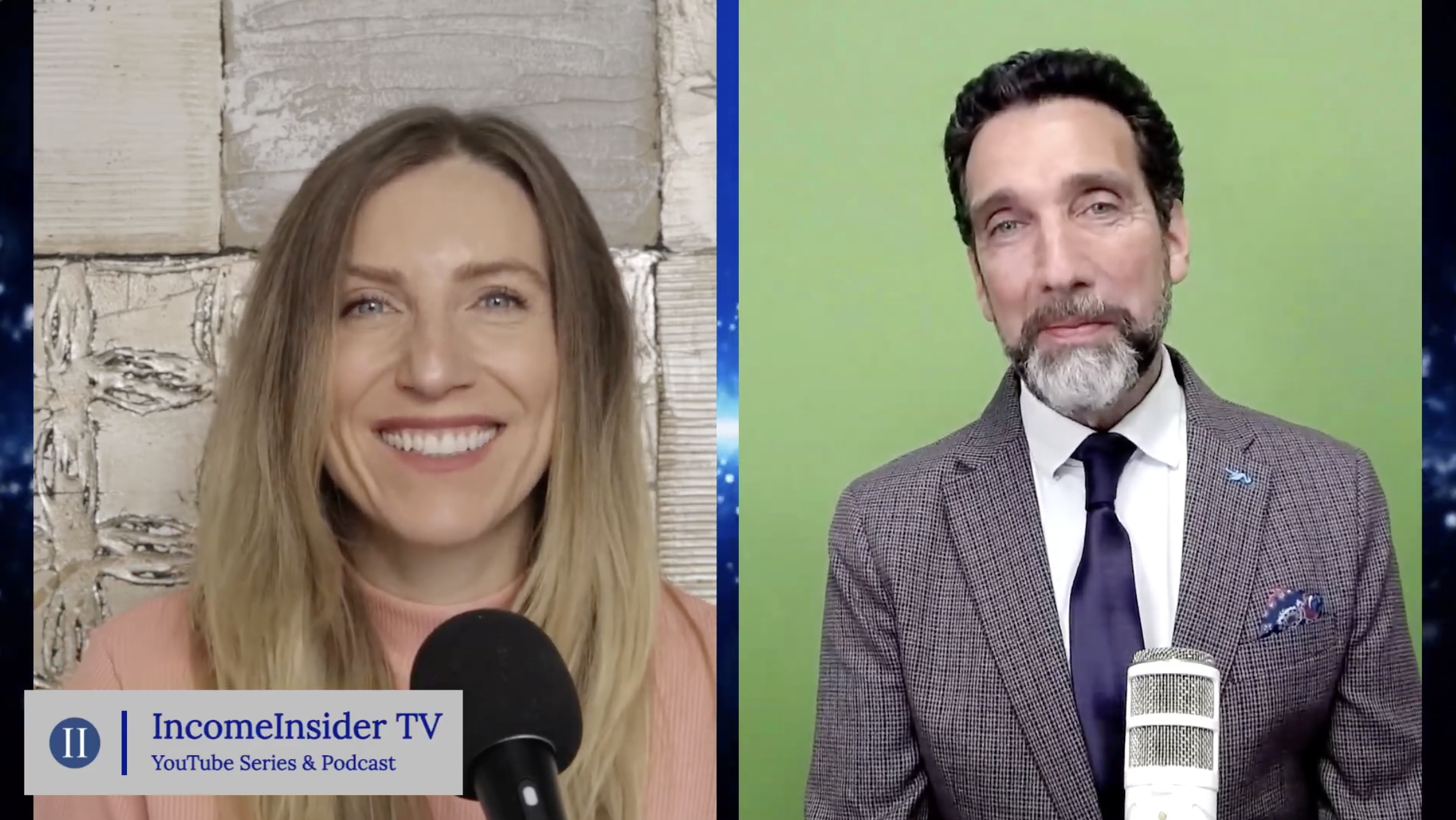
Sam Laliberte and Devlyn Steele on IncomeInsider TV
Another important part of the interview was Steele’s argument that this is not merely a bad stretch in the market. He tied today’s retirement unease to long-term structural problems, especially runaway federal spending and mounting debt.
He argued that, regardless of party, Washington has spent decades spending beyond its means, with each administration outspending the last. In his view, that cycle has steadily weakened the dollar and made inflation a more permanent threat.
That matters because it changes the way retirement savers should think. If the system is dealing with deeper monetary strain rather than a temporary downturn, then simply hoping for a return to normal may not be enough.
Steele repeatedly came back to the idea that “hope is not a plan,” and that retirement savers need to become more active and more informed about the risks built into their current strategy.
Related: Bri Teresi Discusses Crypto, Gold, and Financial Sovereignty on IncomeInsider TV
Why more savers are looking at gold and silver
Since Steele represents Augusta Precious Metals, the conversation naturally turned to gold and silver. His pitch was not that savers should dump every stock, bond, and dollar they own. In fact, he explicitly said he was not telling people to sell everything and go all-in on precious metals.
His case was that too many Americans are overexposed to paper assets and may want to consider diversifying into something outside the same system of banks, financial institutions, and government promises.
One of the more memorable lines in the interview was Steele’s phrase “diversifying your trust.” By that, he meant that many portfolios are diversified only within the paper system itself.
Stocks, bonds, retirement accounts, and cash may look varied on paper, but they are still deeply tied to the same institutions and policy environment. Gold and silver, in his view, provide a hedge not only against inflation, but against overreliance on that broader system.
That framing will appeal to many Americans, especially those already skeptical of central banks, federal spending, and the long-term direction of the dollar.
Why many Americans still hesitate to make a move
Steele also spent time explaining why more Americans have not acted on these concerns. His argument was that many workers built their retirement savings through employer-sponsored plans, where choices are typically limited to paper-based options and active decision-making is minimal. Over time, that conditions people to let institutions make the big calls for them.
He also argued that the broader advisory system has its own built-in incentives. Advisors operating under assets-under-management models are generally compensated for keeping money inside the kinds of products they already manage.
According to Steele, that makes it harder for savers to hear a fair case for assets outside that framework. Whether readers fully agree with that criticism or not, it was clearly a central part of his explanation for why physical precious metals remain underowned by Americans.
The biggest takeaway: education before action
Perhaps the most useful part of the interview, even for readers with no interest in gold or silver, was Steele’s repeated emphasis on education. He argued that nobody will care as much about your retirement as you do, and that too many people spend decades working hard for their money without spending even a fraction of that time learning how to protect it.
That was arguably the strongest point in the entire discussion. Steele pushed listeners to stop assuming that the old playbook will automatically work in a changing economy. He urged people to ask harder questions: Are your returns actually beating inflation?
Are you too concentrated in one part of the market? Have you accounted for healthcare costs and later-life expenses? Do you really understand the risks built into your retirement plan?
Even readers who never buy a single ounce of gold can still benefit from that broader message.
Augusta’s pitch: a lower-pressure model
The interview also gave Steele an opportunity to explain what Augusta Precious Metals claims makes it different from both other gold dealers and traditional financial institutions. He said Augusta uses salaried educators rather than commission-based salespeople, which he argued creates a more relaxed and more educational process for customers.
He also said the company is transparent about how it makes money, earning revenue on the spread between buy and sell prices while offering ongoing support.
That is Augusta’s pitch, and readers can judge for themselves how persuasive they find it. But in the context of this interview, the larger point was clear: Steele wanted listeners to think less like passive account holders and more like active stewards of their own retirement future.
Don't depend on the government
The biggest warning from this episode was not that a single market crash is coming tomorrow. It was that retirement savers may be underestimating the long-term danger of inflation, debt, and currency weakness.
Steele’s message was that many Americans are still treating this like a temporary rough patch, when the underlying pressures may be much deeper and more persistent.
For conservative Americans, the core message is easy to grasp: Washington will not protect your purchasing power for you.
The institutions managing your money are not automatically aligned with your interests. And if your retirement strategy depends entirely on the assumption that the dollar will remain strong and the system will keep functioning the way it always has, that may be a dangerous assumption.
Whether readers agree with Steele’s case for precious metals or not, his broader challenge is worth hearing: get educated, get involved, and stop assuming hope is a retirement plan.
Download a free copy of Devlyn Steele's Gold Guide on Augusta Precious Metals' website.
